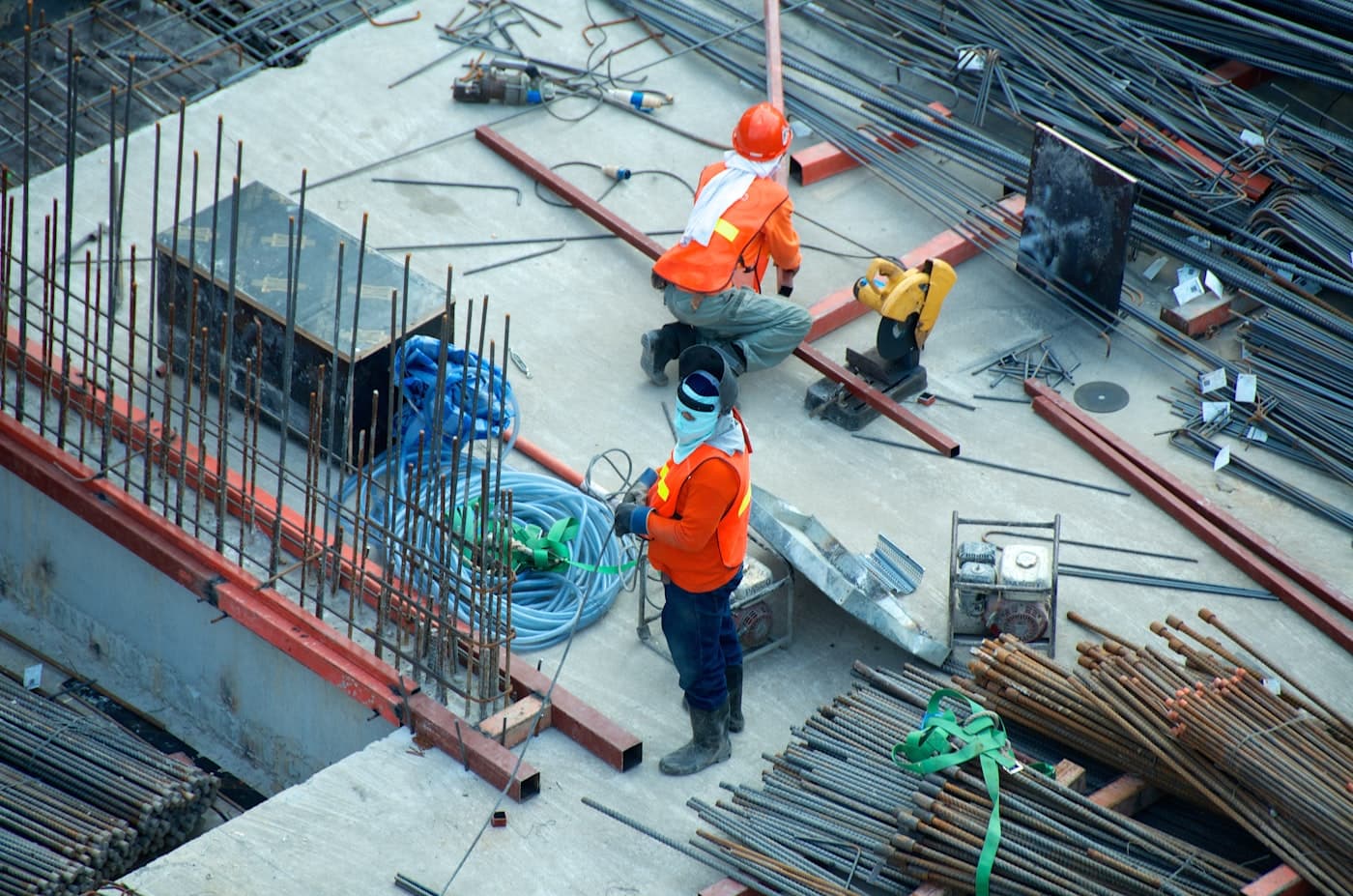
With the Serious Accidents Punishment Act expanding to cover all worksites with five or more employees, and smart safety equipment becoming eligible for 100% recognition under occupational safety & health management cost (OSHMC) starting in 2026, AI CCTV adoption is accelerating rapidly across worksites. In fact, 49% of survey respondents named AI CCTV as the smart safety device used most widely at their sites (Korea Machinery & Equipment News field survey).
Yet the same survey found that 72% of users said smart safety equipment was "not effective (44%) or barely effective (28%)." Why does the most widely deployed device produce the greatest disappointment? This article starts from "what AI CCTV cannot see," examines why BLE beacon and wearable-based real-time location systems (RTLS) are necessary, and provides data to guide how the two should be used together.
1. First — What AI CCTV Does Well
AI CCTV pairs standard CCTV cameras with deep-learning video analytics (such as YOLO-family models) to automatically detect dangerous situations without requiring personnel to monitor screens continuously. It is classified as a legitimate "hazard monitoring device" under the OSHMC ministerial notice.
- PPE non-compliance detection — Identifying workers not wearing hard hats, safety harnesses, or safety vests
- Restricted zone and heavy machinery proximity violations — Access to prohibited areas; approach to the operating radius of excavators and cranes
- Fall and collapse detection — Recognizing a worker who has fallen to the ground
- Early fire and smoke detection — Detecting smoke and flame patterns in the early stages of ignition
Hyundai Engineering & Construction has validated an AI model for detecting missing hard hats and machinery entrapment hazard distances (Financial News), and Seoul City has operated an AI CCTV real-time monitoring pilot program at private construction sites (Security News). The ability to produce intuitive visual evidence and monitor a wide area from a single screen is a clear strength.
The key insight is not that "AI CCTV is useless." AI CCTV excels at observing the worksite (space, structures, and behavior). The problem is that a significant proportion of industrial accidents occur in "places the camera cannot see" and "inside the human body."
2. Seven Things AI CCTV Structurally Cannot See
① Blind Spots — A Physical Problem That Software Cannot Solve
A camera sees only what is within its field of view. Areas behind scaffolding, formwork, stockpiles, and structures are fundamentally invisible — and as construction progresses and structures change, new blind spots are constantly created. Mobile CCTV is proposed as a workaround, but it is not a fundamental solution (ADT Caps).
② Degraded Recognition in Darkness, Backlighting, Adverse Weather, and Dust
Video recognition is sensitive to field of view, weather, and lighting. Reduced accuracy in rain, fog, dust, at night, in backlighting, and with occlusion is a limitation the industry universally acknowledges (ADT Caps).
③ Reactive Architecture — Alerts Come After the Accident Is Seen
AI CCTV detects a dangerous situation visually and then issues an alert. An accident that occurs outside the camera's field of view is not detected at all — and even when it is detected, it is "something that has already happened" (Superb AI).
④ No Biometrics, No Precise Location, No Individual Identification
This is the most fundamental limitation. A camera cannot measure heart rate, body temperature, oxygen saturation, or consciousness. In other words, AI CCTV can see "whether a worker is doing something dangerous" but not "whether the worker's body is in a dangerous state." Internal conditions such as heat stroke, hypoxia, and cardiac arrest are invisible to video.
⑤ False Alarms, Missed Detections — and a Critical Weakness in Fall Detection
False positives are the primary driver of on-site distrust. In one deployment case, retraining reduced false alarm notifications from 4.54 million per month to 350,000 and raised accuracy from 36% to 81% — which simultaneously reveals how massive the initial false-alarm volume was (AI Times). More critically, an academic paper analyzing 13 construction site field trials found that fall detection accuracy fell below the recognized benchmark (90%) — even while fire and PPE-non-compliance detection exceeded the threshold (KCI Paper, 2024). The most important capability on-site was the weakest.
⑥ Privacy and Worker Resistance to Surveillance
Video is personal data. The Personal Information Protection Act requires either worker consent or labor-management consultation (Personal Information Protection Commission), and the Supreme Court has ruled in favor of workers who covered workplace CCTV cameras, illustrating that surveillance resistance can and does escalate into real legal disputes (Law Times).
⑦ Where Infrastructure Does Not Reach — Underground, Tunnels, Confined Spaces
AI CCTV presupposes power, network connectivity, and server infrastructure. Underground areas, tunnels, confined spaces, and highly mobile civil engineering sites where infrastructure installation is itself difficult are hard to cover with fixed cameras alone (KCI Paper).
3. What the Data Says About "Accidents Cameras Miss"
In 2024, industrial accident fatalities reached 589 (Ministry of Employment and Labor preliminary figure, based on accident investigation targets) — of which 276 (46.9%) were in construction and 175 (29.7%) in manufacturing (Segye Ilbo · Ministry of Employment and Labor). The breakdown of accident types makes AI CCTV's limitations even more apparent.
- Falls 38.5% (227 fatalities) — A camera may capture the moment of the fall, but cannot determine post-fall consciousness or cardiac arrest status
- Entrapment 11.2% (66 fatalities) — A high proportion occur in blind spots between equipment and structures
- Crushed by overturning objects 7.8% (46 fatalities) — Often under or behind equipment, making video detection difficult
Confined space suffocation is the area where cameras are most powerless. Over the past 10 years, the fatality rate in confined-space suffocation incidents is approximately 40.2% (136 fatalities) — roughly 41 times the fatality rate for general accident-type disasters (Safety News). In spaces like manholes, septic tanks, and sumps — where even verifying whether someone has entered is difficult from outside — the delay between when a colleague notices something is wrong and when a report is made is the direct cause of the high fatality rate.
In emergency response, time is survival itself. In the case of cardiac arrest, if CPR and AED are administered within 4 minutes, the survival rate reaches approximately 80% — but survival probability drops 7–10% for every minute of delay (general medical standard for cardiac arrest). Korea's general cardiac arrest survival rate is approximately 3.6% (Seoul Economic Daily). A system where "a person sees the accident, makes a judgment, and then dispatches help" cannot reliably capture that window.
4. Cameras Watch the Worksite; BLE Beacons and Wearables Watch the Worker
This is precisely where BLE beacon-based real-time location systems (RTLS) and wearable safety devices enter the picture. Here is how they work:
- Location beacons are installed throughout the worksite and exchange signals (RSSI) with tags worn by workers (smart hard hats, safety belt beacons) to determine location even indoors and underground. Accuracy is within approximately 5 meters under standard conditions, with greater precision possible using technologies such as AoA; tag batteries last for years.
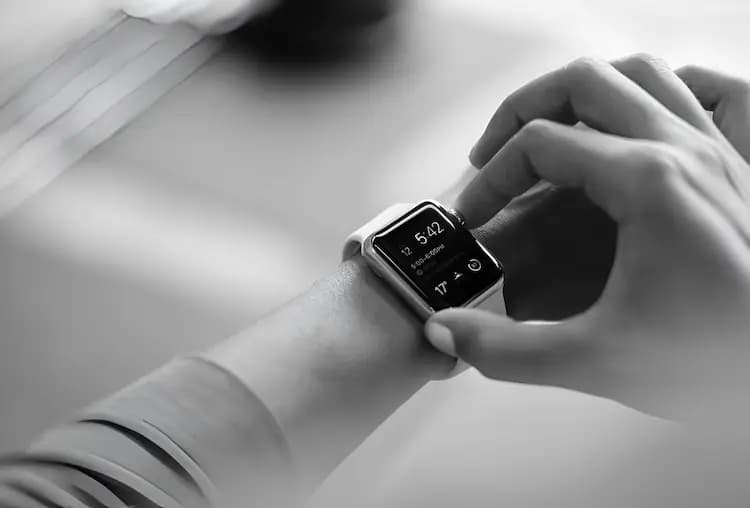
- Wearable sensors detect — directly on the body — whether equipment is being worn, falls (via 3-axis accelerometer), carbon monoxide and oxygen levels, proximity to high voltage, and biometrics such as heart rate and body temperature; they transmit automatic or manual SOS signals when a hazard is detected.
Being radio-based makes all the difference. Because the signal operates independently of camera field of view and obstructions, it functions in blind spots, confined spaces, underground, tunnels, at night, and in adverse weather (ORBRO).
AI CCTV vs. BLE Beacon and Wearable RTLS — Key Differences
- What it monitors — CCTV: space, structures, behavior / RTLS & wearables: worker location, biometrics, status
- Blind spots — CCTV: anything outside the field of view or obscured is undetectable / RTLS: radio-based, covers behind structures and inside confined spaces
- Response timing — CCTV: alerts issued after the accident is "seen" (reactive) / RTLS: automatic alarm at the instant of zone entry, fall, or gas event (real-time)
- Biometrics and consciousness — CCTV: not measurable / Wearables: detects heart rate, body temperature, immobility; automatically transmits SOS even when the worker is unconscious
- Individual identification — CCTV: effectively anonymous; identification is post-hoc analysis / RTLS: tag ID = worker identity; remaining headcount verifiable in real time
- Installation and environment — CCTV: requires power and network, fixed installation / Wearables & beacons: battery-powered, easy to redeploy as construction phases change
- Privacy — CCTV: significant resistance to video recording; consent issues / RTLS: no video recording (though consent for location tracking is still required)
Leading companies are already migrating toward person-centric sensing. POSCO operates smart hard hats integrating 15 components including cameras, gas detectors, high-voltage sensors, and smart tags (POSCO Newsroom), and SK Hynix is pursuing a digital safety management transformation combining IoT and AI analytics (Security News).
5. So Are BLE Beacons and Wearables Perfect? — Their Limitations Are Real Too
In the interest of balance, here are the limitations of RTLS and wearables. Honest comparison leads to better decisions.
- Positioning error — In environments with heavy radio interference or reflection, location precision may degrade.
- Initial infrastructure — Deploying and calibrating location beacons requires upfront setup work.
- Battery management — Tag and beacon battery status must be checked periodically.
- Wear compliance — If workers do not wear equipment correctly, it does not work. This is the most practical challenge.
- Structural and environmental hazards — "Environmental hazards" such as formwork collapse or fire spread are difficult to detect with only person-worn sensors. This is actually an area where CCTV excels.
6. Conclusion — Not Competition, but Layers
The right answer is not to choose one over the other — it is to assign each a distinct role.
- AI CCTV handles the environment layer — behavior, structures, and fire across wide areas.
- BLE beacon and wearable RTLS handles the person layer — blind spots, biometrics, location, and immediate SOS.
Reports from construction sites deploying both layers simultaneously indicate accident rates reduced by as much as 40–50% (ABC Carolinas). A worker who collapses in an area the camera cannot reach — alerted by the person layer with zero delay. That is how worksite safety gaps are closed.
The timing is also favorable from a cost perspective. Starting with contracts executed in 2026, smart safety equipment may be charged to OSHMC at 100% (subject to a 20% cap on total OSHMC), and AI CCTV, BLE beacons, and wearables all qualify (Ministry of Employment and Labor Notice No. 2024-53 and No. 2025-11). Small worksites may also access a government support program of up to KRW 40 million.
7. SenseZero's Approach
SenseZero is a "person layer" safety management solution that integrates BLE location beacons + wearables (smart hard hats and safety belt beacons) + real-time location, biometrics, and proximity detection + gas/fall SOS + AI risk prediction into a single platform.
- Hazardous zone entry and exit detected in real time, triggering simultaneous alerts to workers and the control center
- Automatic SOS transmission in the event of a fall, immobility, or gas anomaly — even when the worker is unconscious
- Per-worker visibility of "who is where" on-site — immediate headcount verification in emergencies
- AI risk prediction that learns hazard patterns from accumulated data
If you are already running AI CCTV, adding the person layer to cover blind spots and worker biometrics and location data transforms your worksite safety posture — without replacing the infrastructure you already have. With 100% OSHMC recognition and government support converging now, this is the moment when the return on investment is greatest.
Curious how SenseZero's BLE beacon and wearable real-time safety management solution would work at your worksite? Request a demo or PoC.